

No-Gi vs Gi BJJ: What's the Difference?

If you've been researching Brazilian Jiu Jitsu, you've probably come across the terms "gi" and "no-gi." They refer to the two main ways BJJ is practised, and the distinction goes deeper than just what you wear. Understanding the difference between gi and no-gi BJJ will help you decide which style to try first — or, like most grapplers, you might end up training both.
What Is Gi BJJ?
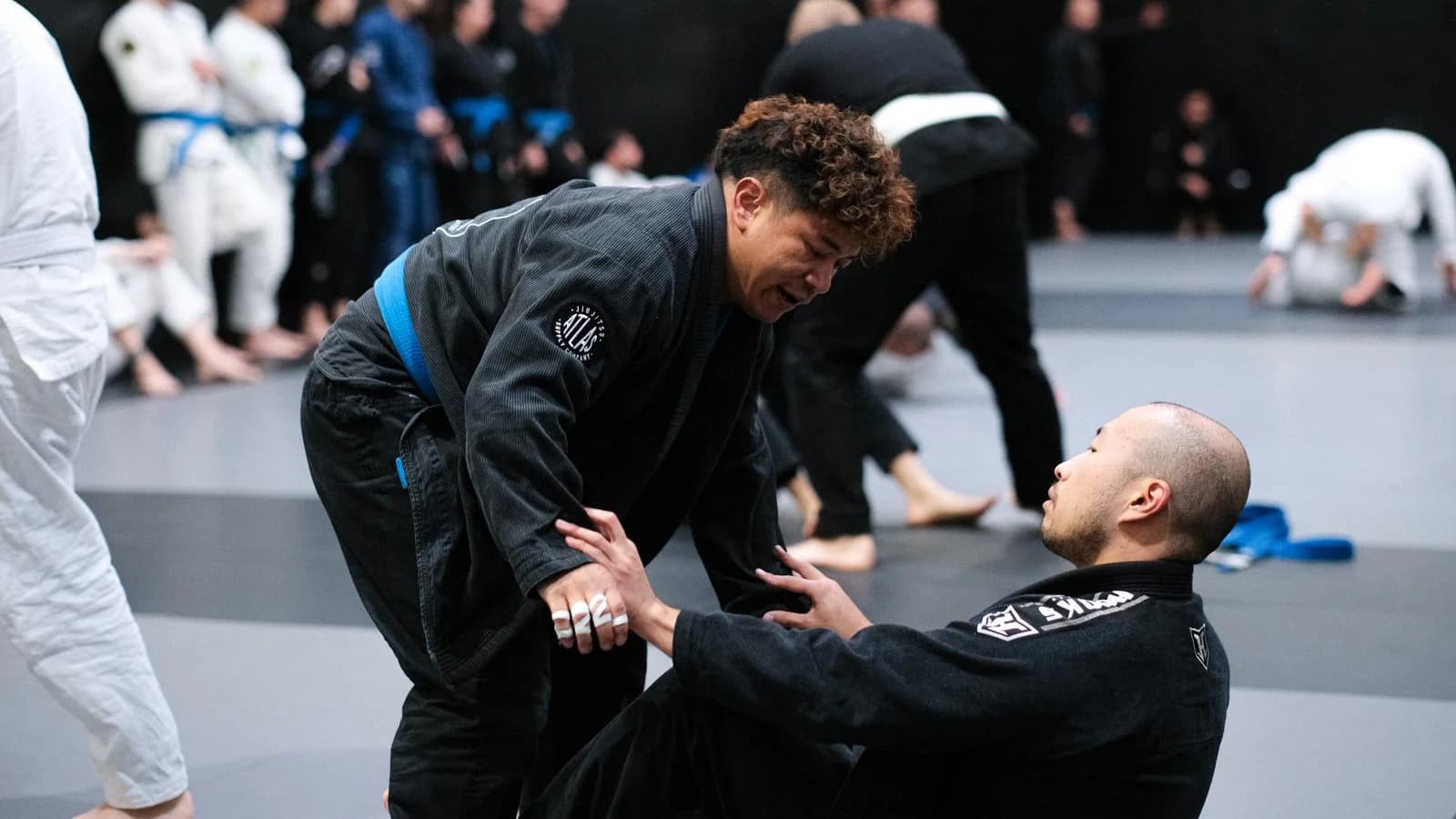
In gi BJJ, practitioners wear a traditional uniform called a gi (also known as a kimono). The gi consists of a heavy cotton jacket, trousers, and a belt that indicates your rank. The fabric is thick and durable, designed to withstand the constant gripping and pulling that defines gi grappling.
The gi itself becomes a tool in your arsenal. You can grip your opponent's collar, sleeves, and trouser legs to control their movement, set up sweeps, and execute submissions like chokes that rely on the fabric. This creates a slower, more methodical style of grappling where grip fighting is a fundamental skill.
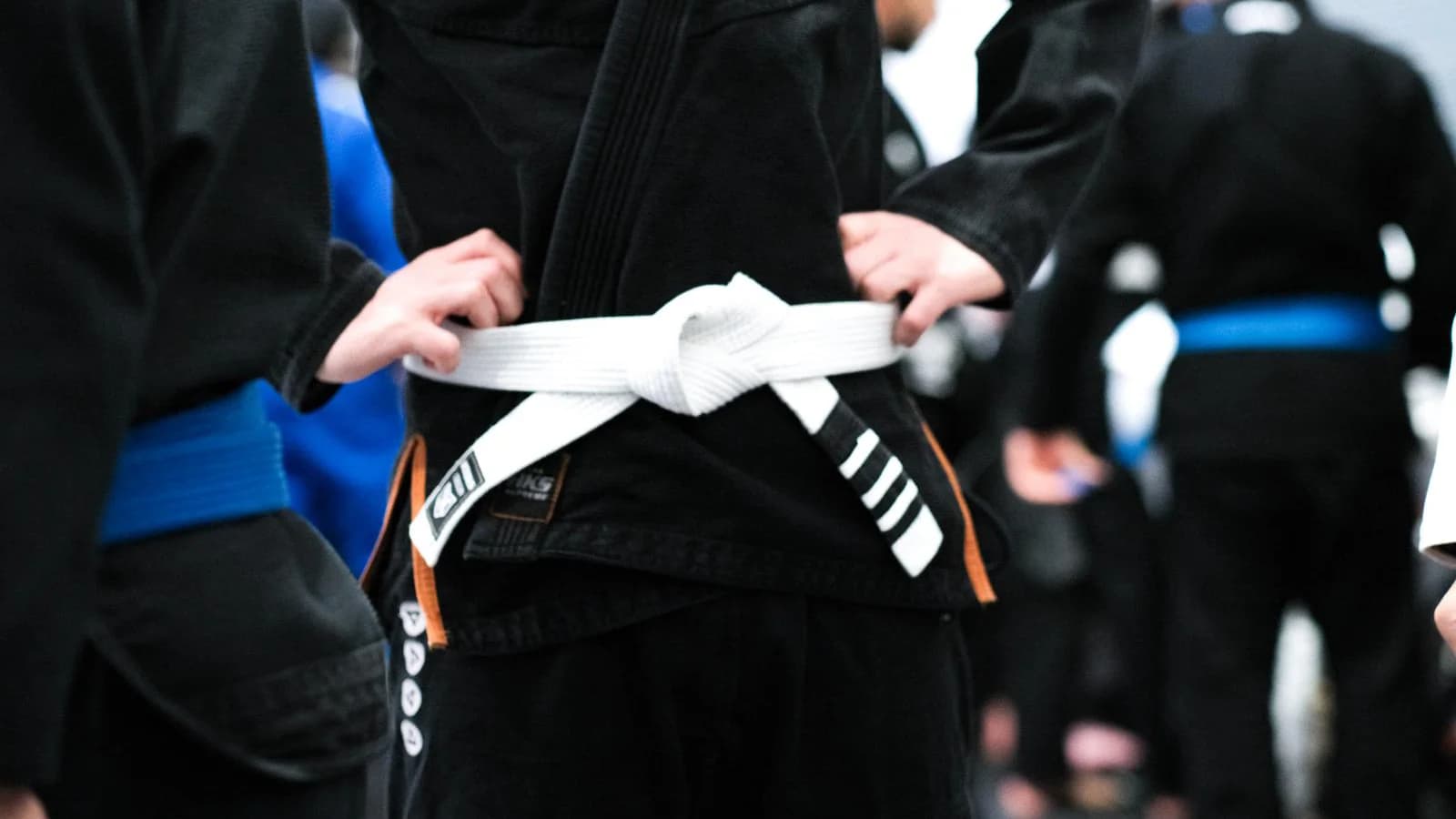
Gi BJJ is the traditional format of the art and is the version most closely associated with the belt ranking system. If you train at a gym that awards belts — from white through to black — your progress is typically assessed in the gi.
What Is No-Gi BJJ?
No-gi BJJ is practised in athletic clothing, typically a rash guard and shorts or spats. Without the heavy fabric of the gi, there are no collar grips or sleeve grips to rely on. Instead, you control your opponent using underhooks, overhooks, wrist control, and body locks.
No-gi tends to be faster and more dynamic. Because your opponent can slip out of grips more easily, transitions happen quickly and scrambles are more common. The submission game shifts too — guillotines, leg locks, and darces become more prominent, while gi-specific chokes disappear entirely.
No-gi grappling has grown enormously in popularity over the past decade, driven in part by high-profile submission grappling competitions and its closer resemblance to MMA grappling.
Key Differences on the Mat
The clothing difference creates a cascade of tactical changes that affect almost every aspect of the game:
- Pace: No-gi is generally faster. Without gi grips to slow things down, exchanges happen more quickly and positions change more frequently.
- Grip fighting: In the gi, much of the battle is won or lost in the grips. No-gi replaces this with a focus on underhooks, head position, and body control.
- Submissions: The gi opens up a wide range of collar chokes (cross choke, bow-and-arrow, loop choke) that simply don't exist no-gi. No-gi tends to emphasise guillotines, leg locks, and arm triangles.
- Guard game: Gi guards like spider guard, lasso guard, and worm guard rely on sleeve and trouser grips. No-gi guard players often favour butterfly guard, half guard, and leg entanglements.
- Escapes: It's harder to hold someone in the gi because you have more gripping options. In no-gi, sweat and the absence of fabric make escapes slippery but positions harder to maintain.
Which Should You Start With?
There's no wrong answer, but here's how we think about it at Nakama BJJ in Keilor East:
Start with no-gi if: you want a faster-paced introduction, you're interested in MMA or submission grappling, or you simply prefer training in athletic wear. No-gi is often the easier entry point for complete beginners because there are fewer grips to learn initially.
Start with gi if: you want to develop a technical, detail-oriented game, you're interested in the traditional belt progression, or you want to build a strong defensive foundation. The gi forces you to be precise with your technique because your opponent has more tools to control you.
Our honest recommendation? Try both. Most BJJ practitioners train in both formats, and the skills transfer between them more than you might expect. The fundamentals — positional hierarchy, weight distribution, hip movement, and timing — are universal.
Does Training One Help the Other?
Absolutely. Many of the world's best grapplers train both gi and no-gi regularly. Gi training tends to improve your defensive awareness and technical precision because the gi gives your opponent so many options to control you. You learn to be deliberate with every movement.
No-gi training develops your speed, scrambling ability, and reliance on body mechanics rather than grips. When you return to the gi after a period of no-gi training, you'll often find that your movement and transitions have improved.
The combination of both creates a well-rounded grappler who can adapt to any ruleset or situation.
What About Competition?
Both gi and no-gi have thriving competition scenes. The International Brazilian Jiu Jitsu Federation (IBJJF) runs the largest gi tournaments worldwide, while organisations like ADCC represent the pinnacle of no-gi submission grappling. Many competitors enter both formats at local and national level.
If competition interests you, training in both gi and no-gi will give you the most options and the broadest skill set.
Gi and No-Gi at Nakama BJJ
At Nakama BJJ in Keilor East, Melbourne, our timetable includes both gi and no-gi classes throughout the week. Our coaching team can help you navigate which classes suit your goals, whether you're a complete beginner or looking to expand your existing game.
Check our class timetable to see when gi and no-gi sessions run, and book a free trial class to experience both styles for yourself. The best way to understand the difference is to feel it on the mats.
Ready to Start Your Martial Arts Journey?
Experience world-class BJJ, Muay Thai, and wrestling coaching at Nakama BJJ in Keilor East, Melbourne. Your first class is free — no experience necessary.
Book Your Free TrialRelated Articles
Nervous about your first Brazilian Jiu Jitsu class? Here's everything you need to know before stepping on the mats at a Melbourne BJJ gym.
22 September 2025
A complete guide to the Brazilian Jiu Jitsu belt system. Learn what each belt represents, how long promotions take, and what to expect at every stage.
4 November 2025